EP 49 - Does Integration Close Racial Disparities?
Transcript
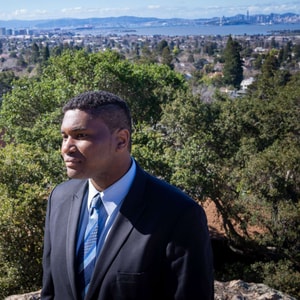
Hello and welcome to the latest episode of Who Belongs, a podcast from the Onb Institute at UC Berkeley. In this episode, we're going to hear from Darryl Owens, who is a policy analyst at California Yimby and a writer on substat who focuses on housing planning, displacement, mobility, and other issues. He just authored a new piece called Segregation or Integration, which combines data on housing policy with his personal experiences growing up in Berkeley, living in different neighborhoods. And we also have with us Steven Menendian, who will give us his thoughts on the article. Steven is our assistant director here at Obi who has published extensively on issues related to segregation and housing. And so his perspectives are always illuminating. So let's get into it. Here was our conversation. So, Gerald, you wrote an interesting article about this long running debate between two approaches to what you do with low income housing, where you cite it. Do you put it in low income communities of color? Do you put it in more affluent white communities? There's one faction that advocates for the former and another one that advocates for the latter, and you offer a critique of both of these camps. So maybe you can just start us off by giving us a brief synopsis of the article.
Speaker B:Sure. The reason why I wrote the article, I've actually always wanted to talk about this because it's a debate pending right now, even in the old city I live in Berkeley right now. They're debating whether they should put more subsidized housing in low income areas that are historically red lined and black, but the gentrification is depleting the black population or whether the subsidized housing should be placed in formerly or not formally currently exclusionary areas that are overwhelmingly wide and affluent. And the debate has always been between the sort of, like, equity nonprofit groups that are located in red lined areas that generally want more subsidized housing located in these enclaves to combat genderication. This is kind of the popular current racial and social justice narrative versus the much more long time narrative of putting subsidized housing in all neighborhoods, but especially in exclusionary ones, as an integration method so that people have access to these resources that these high income communities have. And so it's a very interesting debate. It seems to only really occur in these, like, hyper gentrifying areas, which in the vast majority of the country, they're mostly dealing with this investment. But in these hypergenifying areas is a very interesting debate. And I saw like, I thought, a really sort of ridiculous tweet that was designed to piss people off, and it did. That poked a hole in this conversation, saying that the desire to have communities of color or desire to have people of certain ethnic minority groups live in white neighborhoods is tantamount to eliminating their identity. And that's not the first time I've heard that. I've actually heard that from another person who considered themselves to be pretty far left in Berkeley. A white guy who lived in a black neighborhood, ironically, who went off about how the idea integration is an idea, that you don't like communities of color, that you think that they somehow foster bad behavior, that they don't. Lead to good outcomes and therefore essentially trying to erase their identities by dispersing them out into white areas is what the liberal integration argument is. And I thought that that was pretty stupid, so I decided to write an article about it. However, this isn't the first time I've actually dived into the segregation issue. It's just the first time I've done it on my substance. When I was in high school, I actually did a long essay and video article about the desegregation of Berkeley's school system, which was the first city in the United States of a large size to desegregate its public schools. Of course, Kamala Harris was one of its first students, and I had, in 2014, talk to a large amount of longtime black residents about how they felt about it. And I was actually pretty surprised as a young person to discover that a lot of them didn't think much of it and thought, in hindsight, that they felt like they had given up a lot of power and control about their educational system and that there was a whole host of problems that came along with integration. And yeah, so that was kind of what inspired me to write the article and everything.
Speaker A:One of the interesting things I liked about your critique of the people who say we should invest more and more public housing in low income communities of color and not integrate them because doing so would break up those communities. And then you make a distinction between neighborhoods and communities, which I thought was really smart. So can you tell us a little bit about that?
Speaker B:Yeah, so the entire fallacy of that idea that somehow putting minorities in white areas would somehow destroy ethnic enclaves is, number one, indicator that they don't understand how a community works, and number two, it illustrates that they don't understand how redlining worked. And then, number three, they don't understand, most importantly, why so many white communities fought for segregation in the first place. They were never worried about the idea that black people would assimilate with white people and they would all become one thing. If you watch old videos like the Levittown documentaries and Whatnot all the Way Home is another good desegregation documentary from the 1950s, most of these are about fair housing laws. They were worried that the entrance of some black residents would lead to a black community in their neighborhoods and subsequently the immigration of more black residents into their neighborhoods. Nobody thinks that simply putting these communities in a white neighborhood is going to erase their ethnic identity. Quite contrary. What happens is that they create more spaces where people of color feel comfortable outside of formerly red lined areas. And that is what a lot of these white communities feared, having to live alongside a black community. Not that they thought black people would just all of a sudden become white. And so when I hear that critique, it's a very, I think, ignorant take, to put it as nicely as I can. And the broader point here is that and I thought about it too, a community is not just a neighborhood. There are aspects to a community that encompass a neighborhood. The location of community centers, of schools, of religious institutions, of a whole assortment of legal and nonprofit and private commerce that may appeal to that ethnicity or may be very comfortable to that ethnicity, may be focused in an area. That's certainly true, but a community expands far beyond that, especially today in the era of mass communications and transportation. It's not a thing that like, for example, where I'm from in Berkeley, the Jewish community, as someone pointed this out, doesn't have a specific neighborhood, but it's very strong and tight knit, irrespective of the lack of a specific neighborhood precisely because it is a placeless, general communication of people altogether that isn't confined to just one area. The black community is like that in much of the Bay Area. Yeah, there are red lined areas where there is a high focus of black people. But I know black people who live in the hills. I know black people who live in red lined areas. And regardless of where you live, the places you go to church and the places you go to school and the places you go to work are usually a lot more relevant to what your community is than your literal neighbor next door. That's kind of an old fashioned idea of what a community is. And I told about the Chinese community is the same way I mentioned the South Asian community and much of the South Bay area. Your social network is a lot more than just literal blocks. Matter of fact, I feel like personally, having grown up in a black community and a mixed Latino community as well, I didn't know my neighbors nearly as much as I knew the ones. Like, I went to my church and went to my schools, and a lot of them were not my physical neighbors. It just kind of betrays an understanding of what a community is.
Speaker A:Your critique of the other side, the pro integration side, sounds to me is like it doesn't go far enough. It just kind of assumes that if you just mix people that they'll experience similar life outcomes, that it will lead to equality. Can you talk about that critique? And then we'll bring Stephen in a little bit right after to get his thoughts on it too.
Speaker C:Yeah.
Speaker B:So one of the interesting things I sort of drawn away from personally, and to be clear, simply living in an affluent neighborhood actually does give you a lot of benefits. I can personally attest to that. Having lived in a red lined area and then moved to an affluent neighborhood, I definitely think that being able to be in an integrated school system, having direct access to grocery stores, et cetera, definitely gave me advantages that disadvantaged communities did not have. But I do think that how much the integration aspects matter is somewhat overstated in that if we're looking at things that are so foundational to a person's wellbeing, in the future, because we know so much about how children will develop into, we can determine their household earnings, whether they'll be incarcerated or not, their general life trajectories at a pretty early age. How much of that is influenced by necessarily what neighborhoods they live in? I think, again, that is also somewhat of a misunderstanding of the difference between a community and a neighborhood. I use an example of public housing in a very affluent neighborhood that I live in. And what I've noticed is that they are pretty connected to the black community. But just because they live beside millionaires doesn't mean that that wealth is being shared. They're still overwhelmingly poor. They have to generally spend a lot of time taking care of their children because they don't have the resources to put them in tutoring programs. They don't have the resources to put them in after school programs, things that make a child a lot more competitive in school. I think that these performances and early education is what is really the determinant factor in people's future earnings, people's life. And I kind of concluded that, well, there are many advantages to integration, but we can't pretend like simply putting poor people and minorities in wealthy areas is suddenly going to share wealth, because that's not how wealth is shared. It's not through a geographic thing. These are, if anything, signifiers of wealth, but not the causes of it. Nice products, good grocery stores, they can give you some life advantages, no mistake about it. But I don't think that it's the primary cause of what determines a wealthy or better off household. It's the ability to get a loan, having a mortgage. These are the things and of course, yeah, household wealth and how well your children are educated, these are generally the things that determine wealth in the future.
Speaker A:So, Steven, as someone who's researched this issue and publishing your reports on it and looking specifically at outcomes for people different backgrounds based on where they live, based on race and geography and other markers, how does your research square with the observations that we just heard from Darryl?
Speaker C:Well, first, thanks, Mark and Darryl for being in conversation about this. Darryl, I thought the essay, like almost all of your essays, was fascinating and loaded with important insights. Mark, you're totally right to point out that I've been looking at this issue and these sets of issues for many years. In fact, I think one of the first projects I worked on with john Powell, our institute director, was his expert report in the landmark case of Thompson versus HUD. Thompson versus HUD. This was in 2005, by the way. Thompson versus HUD was probably the largest fair housing lawsuit on a metropolitan area basis in probably 30 years at that point. And it was essentially a lawsuit against the Baltimore Public Housing Authority saying that the way in which they were dispersing housing choice voucher recipients was concentrated poverty and reifying segregation. And you can Google in fact, I'd encourage folks to look up John Powell's remedial report, the expert report. He was the lead witness in the case on behalf of the civil rights fair housing community. And we produced like an 80 page report. And in the course of developing that research and that report, that was really the first time, by the way, anyone had done anything that we now call opportunity mapping. That was the genesis of opportunity mapping. And it was also an opportunity for me to really begin to learn the research around this, which I have now studied pretty much very intensely every year since. But that's a foundational piece. I'm not sure where to start. But I think what I would say one place that I would start is that there has been a long running debate for at least since the debate is generally framed by what's called in place versus mobility strategies. And the idea is essentially that you have folks who are low income, you have folks who are segregated on different bases. What is the general path? Do you invest in place or do you invest in connecting people directly to opportunity? And I think everything Darryl said sort of gets at that at one way or the other. And there's much that I agree with him about. And then there's a few things I quarrel with. Let me just set the stage by talking a little bit about the interventions, and then I'll talk about what I think is the role of household wealth because that was a really key point that Darryl made. So the first sort of experiment here is called The Cattro Case. And there's a great book called Waiting for Catrover title by Alexander Paulinakov. And basically what it was, it was see, I think part of the problem here is that in these debates, there's a sense that there's a default. Right. What myron Orfield calls the nonprofit industrial complex sort of has a right to put these low income, rather these subsidized housing units in low income and racially ethnic enclaves, that there's a kind of default position. The problem is that if you look at most federal and local and state housing policy in this country, whether it's housing choice vouchers, whether it's public housing, whether it's litech litech, by the way, being the largest, most of the research shows that until very recently, the vast majority of subsidized housing reinforced segregation, not dispersed it. So that's the problem is that if you look at the first 30 years of litech in Texas, explain what litech is. litech is the Low Income Housing Tax credit program. It's run out of the Treasury Department. Developers sorry, it's subsidized by treasury, not HUD. States administered the program, and developers apply for credits, and then they build credits. It's actually how most subsidized housing in California is built. The Housing Choice Voucher program in the nation housing Choice Voucher program is section eight. It's where people get a voucher. Those are the two big programs. And then public housing from the was generally built in such a way that it concentrated poverty and it reinforced segregation, because in the first 30 years of the 20th century, america built segregation. By 1930, pretty much every place was segregated. But the point I'm trying to make is that there was a debate, there's been a long running debate on what what do you do? And the debate is skewed because generally the policy, intentionally or not, has reinforced segregation. Very little of the policy has actually opened up mobility options. So the debate is very odd because what you have is nonprofit developers in California attacking the Housing Department in California, particularly around litech, for trying to do more mobility, when in fact, for the first 30 years of the program, the default has been resegregating and reconcentrating poverty. So they're trying to open up opportunity. And that little movement to try and rebalance the program is creating enormous pushback. But let me just back up. So the first intervention here was really Catro Gatro was this massive lawsuit dorothy Catro in Chicago in the early 1970s, where this Chicago Housing Authority was essentially placing black, low income housing residents into black poor neighborhoods. And for the first time, a federal court said, you can't do that, and went all the way to the Supreme Court. And it produced a mountain of evidence for the first time that showed that moving low income black residents to low poverty neighborhoods and also white neighborhoods produced much better long term outcomes. Their children did better, their families did better, they were happier, healthier, and so forth. And that experiment inspired what's called the Moving to Opportunity Intervention, which was a congressionally funded experiment in five cities in 1990. 319, 90, 419, 90, 519, 96. And there was mixed results on Mto, but then Ross Chetty studied it more recently, found profound long term effects. And there have been a number of these interventions. Ross Chetty was involved in his group opportunity insights at one called CMTO. Creating move to opportunity in Seattle. You can look that up. There's the Thompson case. There's the Denver Child Study. There's just a whole raft of these interventions. And almost without exception, they show that the mobility strategies produce better outcomes along a range of indicators. And I think one of the contextual factors that's different here and Darryl, this is one of the key points I wanted to get at with you is that what the interviews of parents and families showed in the 1990s around Mto is that the neighborhoods that they were living in were often very desperate conditions. You had high rates of violence, extreme concentrated poverty, neighborhoods that were like 50, 60, 70% concentrated poverty. And generally the social science research shows that whenever you have a neighborhood poverty rate that starts at about 20%, there's an increase in harmful effects that continue on sort of a sharp upward trajectory until you get to about 40%. That's considered concentrated poverty. And so all these harmful things were happening. I think it's a little bit of a different context. Darryl when you're talking about a neighborhood that's maybe 15% poverty or 18% poverty, rather than one that's like 70% poverty and has intense crime, intense mental health effects, really unsafe for kids to walk around, lack of access to grocery stores, no jobs, food deserts, all of these harmful effects, not just sort of environmental poverty. So the research I think there's been this dilemma, right, where people are saying, well, we need to put more investments in mobility strategies. And sometimes that means moving low income black or families of color to white neighborhoods. But sometimes that just means the moving to stable, integrated neighborhoods doesn't necessarily mean white neighborhoods per se versus investments in place. And I think the problem with that debate is that oftentimes the critiques of mobility assume that we have actually tried this very hard, when in fact it's, in my view, sort of 98% in place investments and 2% mobility investments. I have a lot more to say, but I'll pause there.
Speaker B:Yeah, I think it's a really good point. And actually I totally agree with you on that very last point you made. And this is something that very much frustrates me, especially about the online housing discourse. It's how much of it is based wholly on hypotheticals rather than any actual, like, real world policy. We're not integrating, and I made that very clear at the start of my article. We're not integrating. We are more segregated in many cases than we've been since the civil rights movement. So this is a totally hypothetical, for the most part argument. You discussed earlier that the studies showed that the black residents or the poor residents did a lot better when they were moved into white neighborhoods. I don't dispute that, and I think that's absolutely true. But I think that what I kind of got into was really the fact of integration being were they on par with white counterparts and affluent counterparts, or had they just improved dramatically from a baseline of extreme poverty? I don't if you know the answer.
Speaker C:Well, I think the point you're making is the question of sort of absolute improvement versus relative equity or quality. And I think it's a very important point because even our segregation research shows that essentially what you're saying is true, that children of, let's say, low income black families or Latino families who move into, let's say, predominantly white, more affluent neighborhoods, they don't actually necessarily catch up with the white counterpart. Right, they don't. But they have much better life outcomes than they would have if they were staying in a neighborhood of concentrated poverty. So I think you're right. From an equity perspective, it's not closing that gap, but on an absolute basis, it's a massive improvement. So Larry Katz, for example, did some of the early studies on Mto and found that the mothers of children were like the mental health outcomes were dramatic in terms of worrying about their children's safety and well being. Girls in particular did better, even though there were some disappointing outcomes. So it's mixed, right? It's not perfect, and it's also complicated. So there's a lot of nuance here. Chetty's more recent research on some of these studies, his Big 2020 paper on race and intergenerational mobility found, for example, that it depends on a lot of the conditions. So three conditions he pointed out were, number one, neighborhood poverty. Number two, is there a lot of latent racism in the neighborhood? If there is, that actually impedes black children's performance and outcomes? And number three, are there mentors, especially for black boys, that prove to be very important. It doesn't have to be a father in the household, but is there a coach, a teacher, another parent or father in the neighborhood that sort of looks after? And Shepherds, you know, the particularly the black boys in the neighborhood, he disagrees performance for black boys and black girls. So there's a lot of nuance here. But in general, the research is overwhelming. The research is overwhelming. There's all sort of this anecdotal evidence, but the research is overwhelming the qualitative and quantitative research that low income children who are growing up in really distressed neighborhoods do much better, moving into lower crime neighborhoods, lower poverty neighborhoods, et cetera, et cetera. The one the one thing I just want to you're right, it's an absolute improvement. It's not the disparities are still there. But one of the other things that's also important is that it's also about getting people closer to so you talked about I think one of the biggest critiques I have of your essay, I think it's phenomenal on so many levels.
Speaker B:Was that no, please critique it because it's boring to disagree with somebody else.
Speaker C:I think one of the things that you do is you overestimate the value of how household wealth wealth is very important. There's no question about it. It's one of the key foundations of structural racism. But part of the reason that wealth matters is because it concatenates into public and private resources. And you mentioned a lot of those. So you have after school programs, you have investments in resources to afford extracurricular activities, sports, et cetera, right? It funds public goods and public services. But one of the things the research shows, particularly Chetty's earlier research and other research is that the individual household matters a lot less than the community and neighborhood wealth. I'll give you a very specific example. So in the first Chetty Big paper on mobility, one of the things they found is that one of the strongest predictors of access to opportunity is the density of dual parent households. And what they found is this is a very nuanced point. So I'll try and say this carefully. Children who grow up in single parent households but who live in neighborhoods that are dense and dual parent households do better than children who grow up in dual parent households but live in neighborhoods that are dense and single parent households. In other words, this is very strange. The household effect of having two parents is actually structural, not individual. And you think about what a dual parent household is. It's just more time for parenting. It's more resources in the household. It's more often more income to share bills and overhead costs and so forth. So the point there, I think, is that dual parent households is a structural effect, right? You may have less a child growing up in a single parent household in the neighborhood that has very few single parent households enjoys the structural effect of the wealth in the neighborhood. That means to say that there are more resources going into it. There's also, by the way, these aren't just all tangible resources. There's a lot of intangible resources. That's something Brown found, including social capital. Chetty's Facebook study that came out last year, was it something like, I don't know, 23 billion Facebook accounts they studied has built on essentially 50 years of research on social capital and social networks. There's a landmark 1973 paper called The Strength of Weak Ties. And there's a lot of theorization around the kinds of ties that facilitate economic advancement and social mobility. But one of the things that social scientists have figured out is that we can moderate ties are often better than strong ties. If you have thick, strong ties in the neighborhood, that often can facilitate downward mobility, especially in high poverty neighborhoods where you have people coming to any bit of capital you get, you have cousins or siblings or aunties or whatever coming to call for that. It's sort of like the effect of, like an athlete who gets rich and then everyone comes out of the woodwork asking for resources. But one of the reasons these ties, weak ties and moderate ties matters is because so much information and value information is word of mouth, especially jobs. As many as 50% of jobs are based on sort of network information. So it's not just about material, tangible resources. It's also about intangible resources. And I think you're right that household wealth matters. But I think overwhelmingly, the structural effects of community wealth what is the fiscal capacity of your community, which is based on property tax values, the ability to raise? What is the public investments in public goods and quality of public goods. I think those matter more for children's outcomes in general, particular children's outcomes, than the household wealth. It's not to say the household wealth doesn't matter. Intergenerational wealth matters. Can your grandparents and parents give you down payment assistance, help you with the rent? Can they help you pay for Sat prep? All that stuff matters. But in general, I think the community wealth is slightly more important than household wealth. That's my main critique.
Speaker B:Okay, I got two points to that. I think the first one is I absolutely agree, and I think that one of the interesting things about my observations was that this was an integration effect within one city and thus one school district, so one amalgamation of property taxes. I think that there is probably a much more profound effect. And this is actually worth noting too, for listeners. I'm coming from the Bay Area, and even in our most impoverished neighborhoods, we don't really have anywhere comparable levels of poverty compared to places like Detroit or Midwestern cities. So when I'm saying impoverished, I'm not talking about the difference between burned out buildings that look like something out of the 1980s Bronx or parts of St. Louis today. I'm talking about people who use some level, maybe public assistance, but homeownership is probably higher than you would see in those other cities. So I do acknowledge that to some degree, you wouldn't see as profound a difference in the gap and improvement compared to what I'm used to. But I think that you make an interesting point here about yeah, so it would be interesting to see I think here's something I like to see, and maybe if there are studies on this, I'd love to see it. I mentioned that I don't know if I've said in the article I think I did, though, that I was curious to see the academic performance of white students who moved into gentrifying neighborhoods that have a considerable amount of minorities and low income people still there. I think that would be an interesting way to parse out the effects of household wealth versus community wealth. Do those why students suddenly start doing poorly? In my anecdotal experience, I think the answer to that question is no, but I would like to see if there's data on it. Gentrification, again, is not nearly as studied as the disinvestment aspect, so it's harder to pull data on that. Two, I think that and this is kind of going to the issue of single parents, right? So everyone knows and it's well established that a single parent household generally does not perform as well as a dual parent household. I think my first question to that is it's usually, and I'm not accusing of racism or anything, but it's kind of a black coated thing because generally when we think about single mothers, it's like welfare moms, general issue in the black community. But then you have like the Latino community. Which is heavily multigenerational households with more than just parents, but also grandparents and uncles all living together. And there's still a poor academic performance in those communities as well. So what are the factors going into that?
Speaker C:Right? Well, a couple of things. One is that we shouldn't stigmatize single parent households. And I think that's one of the things that Chetty study shows is that it actually is not about growing up in a single parent household at the household level. It's the neighborhood effect. It's the structural effect of that that matters. It's if you if you grow up in a neighborhood that has, you know, 2040, 2030, 40, 50% single parent households, that's a very that's a much different outcome than if you're living in a single parent household where there's very few single parent households. Children in those neighborhoods do much better in terms of upward mobility, et cetera. So I think that's the critical nuance. And that avoids the stigmatization and all these sort of George W. Bush like bromides to encourage people to get married. There are all sorts of reasons that maybe people aren't married and so forth. And certainly incarceration, mass incarceration, which is a very racialized project, has played a large role in that. But I think it's important to emphasize again, this is a structural effect, right. And these structures are what are shaping opportunity. It's access to resources. One of the things that all this more recent social scientific research has revealed is a more nuanced understanding of the relative role of each of these geographies. So people used to say, is it the neighborhood that matters? Is it the jurisdiction that matters? Is it the metropolitan area? And the answer to all those questions is yes, they all matter, and they all matter in different ways. So the metropolitan area that you live in sets sort of the economic parameters on industry, employment, resources, etc. So think about I like to compare Detroit to the Bay Area. Detroit sort of was this heyday in 1950. If you are a very wealthy child, or if you're a child of a wealthy auto executive in Detroit, you're probably going to do pretty well in life. But the region is actually pulling you down a little bit. It's not as healthy as if you were living in the Bay Area. Some of the highest rates of upper mobility are for children who grew up in San Jose in San Francisco in the 1980s and 90s because the economy is on a different trajectory. Right. Also, jurisdictions matter, right. School districts often map to the jurisdictional boundaries, but public services are generally organized at the jurisdictional level. That's why zoning is so important and the neighborhoods matter. A lot of the peer effects, the social networks, the social capital, these forming of expectations around educational attainment, the levels of violence and crime, the environmental quality, all these are at the neighborhood level. Chetty and some of his readers actually tries to disaggregate the percentage impact on upward mobility of each of these layers of geography. They all matter. But I think you're absolutely right. I think the research around Mto, you're often talking about families who are really in desperate straits, meaning the environments, they were just incredibly deleterious to children, to well being, to outcomes. That's not quite the same thing. You're talking about growing up in Berkeley. Even with relatively higher levels of poverty. It's not the same thing as growing up in sort of Watts or whatever you have 50, 60% poverty. I do think you're right. There's a difference.
Speaker B:There another thing I want to discuss is, and you've made this point numerous times, this is a structural problem. And that is why I think that to some degree, the structure cannot just be simply focused on the geography of where people live. The fact that our school systems are predicated on success and failure, depending on your address, is itself highly problematic and a huge indictment on the public school systems. The fact that that is such a determinant in your life and that we have to and again, I don't agree with a lot of what they say, some of the pro focusing only in the low income rhetoric. But when I hear, okay, well, we have too many of X population in this area versus that area, I know it's not necessarily on immutable characteristics like race, but it's on things that tend to correlate with them, like single mothers or anything. I kind of question, well, why is the answer necessarily, primarily, or even why should the answer be I know you're not saying solely, but I think a lot of people do sometimes think, well, solely, or this is the primary thing we should do to disperse or increase mobility. Because I know single mothers on Vouchers who live in affluent neighborhoods and they agree their life outcomes are so much better. I get it. But at the same time, it's like if our systems and our structures were truly working as they should, and that everyone has an equality and outcome and not just a relative improvement and standard of living, these factors should not be an impediment on your success in life and your success in the school system. It worries me, especially since segregation is so intense, even when we try to integrate people self segregated and create communities within communities, et cetera, that we don't focus on, like improving the fact that our school systems apparently privileged people who come from better households or people who come from communities that have a lot more systemic wealth. I think that to me is very problematic. I very much like the fact that I was able to move around. But I also think that if I had stayed in a low income neighborhood, that I should have still had the same ability to have the same access to the best tutoring services. That a lot of the white counterparts I saw in school had same access to all the reading time in the world. They got they got their parents reading to them, their nanny's reading to them while my parents was busy working at a payday loan place. These are things that, to me have a much more profound outcome. And I think it's not necessarily something that should be dependent on your residency and your proximity to wealthy people.
Speaker C:Yeah, I think this is obviously a complicated conversation. One of the things that John and I have written about, John in particular before me, is the idea that the debate is in place versus mobility. Well, one of the ways to resolve that debate, and this is a chapter we wrote in a book called The Fight for Fair Housing in 2018 is you just connect people to opportunity. If opportunity is growing in a particular neighborhood because of gentrification and so forth, then you try to do everything you can to keep people there from being displaced. But if the neighborhood is really harmful, if there's a high level of concentrated poverty, if there's a lot of violence, if there's a lot of crime, if there's a lot of environment, you know, toxic toxicity in the environment, whether it's PM 2.5s or leaded water, whatever, you know then. And there's no jobs, then you might be better off with the mobility strategy. The context determines that. One of the questions you asked earlier was about white children in gentrifying neighborhoods. And one of the things that happens in that dynamic is that the schools actually lag the improvement of the neighborhood. Which is strange because you would think that if the property values are going up, the tax dollars are going up, the revenue is going up, there's more resources be invested. But part of the reason for that is, number one, a lot of the white mover gentrifiers don't have children. They're young professionals. And when they do have children, they'll often put their kids in private schools first. So it doesn't matriculate into the public school system. So there's a lag effect there. It takes longer, but just pivoting to schools. I think the schools are very important piece of this debate. And one of the things that you mentioned in your piece, Darrell, is the difference between desegregation and integration. I don't know if you know this, but actually the term desegregation arises because of the Supreme Court. The Supreme Court justices felt that desegregation was a less inflammatory term to use than integration. And that's actually where it came from in the sort of desegregation cases. And John Powell and Michelle Adams and others have made, I think, a very good distinction between desegregation and integration and between integration and radical integration. And I think the difference is sort of desegregation is let's just make sure the systems reflect the school, systems reflect the demographics of the community. Integration is the idea that schools are actually composed in a balanced way. It's not just that you've desegregated. So if you desegregate Detroit but Detroit is 85% black, that's not integration. And radical integration goes a step further, which is to say you don't just make sure that the children of different racial groups are attending the same school and sitting in the same classrooms, but there's a cultural shift. So often integration was viewed as sort of like assimilation, right, that black children would be assimilating into white environments. That's not what real integration is. Real integration is where there's a complete change and overhaul in the culture. And John has made this point many, many times in a variety of formats. So I won't reiterate it, but I think there's a difference between those three forms desegregation integration sort of meaningful or radical integration. And I think Michelle Adams piece on radical integration, you can Google it, is pretty phenomenal in that regard. Prudence Carter, who used to be the dean of our school of education, has also spoken and written a lot about that.
Speaker B:Yeah, John Powell is a really great writer on segregation. If you're listening to this, you should absolutely go read his writings and his research. I want to get back to a point that you made earlier, which is that access to opportunity in areas that are gentrifying, right? And so we want to do everything we can to make sure that if there's an influx of whites that first of all, black people aren't being displaced and that they have access to those economic opportunities. I think that's an interesting point because it seems like so much of the gentrification problem is the fact that even when black people are staying around, they don't have access to those opportunities. And the sort of case in point example I give is San Francisco, which is one of the wealthiest metropolis on earth and yet its black residents are among its most poorest. It's black students are among actually the worst performing in the state of California. And it's really baffling looking at places like San Francisco where the black community there is in worse shape and almost anywhere in the state of California, despite being in one of the most high opportunity cities in the world. And that kind of gets to my point, which is that just because you live next to wealth does not mean you're integrated with wealth. There are aspects of it that definitely happens systemically, like taxes. But hey, if your tax system doesn't actually redistribute that wealth to the poor people to some degree, then there's no real benefit there. And as I pointed out, too economically, especially in today's information economy, I've actually written about this numerous times. I think I talked about this in my piece. I think I talked about this in the black and Asian race relations piece and also the Bay Area crime wave piece. For example, the huge tech community, which I'm a techie, I'm in computer science, is not accessible to the vast majority of black folks, especially black students, they will get, as you noted earlier, relative improvement in that they'll get jobs as blue collar workers in those companies and they'll have higher incomes than they would have had otherwise. But they're not getting the same types of jobs that whites and Asians are getting in those fields. And so access to opportunity can only go so far if the access itself is not actually given to black people at the same level as given to white people. So that kind of gets back to the broader point here that I really tried to hone in on, which is a difference between relative improvements versus comparable improvements and absolute improvements.
Speaker C:One of the frames that I think well describes what you're talking about is the difference between proximity and access. So it's like you can live in the shadow of a phenomenal medical institution like the Cleveland Clinic or University, like UC Berkeley, but you might not have access to it, right? If you don't have health insurance, you can't get access to the care at the Cleveland Clinic or Johns Hopkins or if you aren't a student or don't have a parent who is an employee, you can't get access to the phenomenal resources of UC Berkeley. So proximity does not mean access. I think that's a very important point that you just made.
Speaker B:That was the real point. Article, I think, is that I just wanted to be clear that just because, as they tried to do, put public housing in a white neighborhood and yes, they got a lot of better improvements, probably better nutritional things, probably. Better access to education, et cetera. They're still living in public housing because their earnings are still not comparable to the white folks that they live beside. Right? Otherwise they wouldn't be living there. And I think that that to me is something that we have to focus on, not just talking about geographic concentrations, but why our structures, our school systems and our employment systems fail to untangle segregation. And I think that at least some of my criticism again, I'm not talking about a lot of the high level scholars here, but I think some of my criticism of low level implementations, much of which have been unsuccessful, of integration. And I get the point we haven't actually tried to integrate, truly. But some of the issues that I think that the people who are hostile to integration pick up on is the overemphasis in the location of geography versus the failures of our systems to disaggregate these inequalities. And that to me is a lot more problematic. I really think that I should be allowed to live wherever I want to, yes, and that I should not be restricted because of my race to an ethnic enclave or red lined area. But simultaneously, I do not think that. And I know this, I'm conscious of this because I too am a product of integration. I was able to live in a black neighborhood, and then I was moved to a white neighborhood for the purposes of schooling by my own parents. And I am irritated. That a it's kind of a selection bias thing, because the people who have the ability to do that to some degree, do have a higher level of economic mobility than the people. I came from a lower middle class family, so for that reason, I was able to have higher mobility than a person who's in poverty. It's one of the reasons why we talked about earlier, vouchers versus subsidized housing. One of the reasons why I think Vouchers is a popular program, although I personally don't like it. I wish that we just had subsidized housing in every neighborhood so that people have those mobility things without having to have the state essentially pay landlords.
Speaker C:The Super Voucher program, the small area of Fair Market Rent program, was piloted briefly by the Obama administration to try and give people more access. Instead of keying the voucher to the metropolitan region, they were trying to key it to the zip code so you can get a deeper subsidy, so it opens up more choice. Look, I think there's different ways of looking at this depending on your focus. So I think you're 100% right. The United States has never really tried integration and housing. And in education, we tried it seriously for about five years. Between 1968 and 1973 was where the court really got serious in trying to desegregate and then stepped back, and that was basically it. And by the 1990s, most of the desegregation orders were lifted and school districts were declared unitary status. I think the thing, though, is that the perspective that you the level of perspective you have is really critical. You know, are you looking at children and families outcomes? Are you looking at adult outcomes? I tend to focus more on children. I really care about how children do. If you're looking at adults, it's a whole different set of considerations. And I think the points that you made about proximity versus access become much more salient. And actually, it's most important when looking at adults. Children attend local schools. Adults, just because you're close to something doesn't mean you have access to it, right? If you don't have the degree or the credential, you might not be able to get access to that thing, that job or whatever. So I think often these debates depend on whether you're focused on adults or whether you're focused on children. So if you're trying to get seniors house, that's very different than you're trying to think what is the best environment, what's the optimal environment for a 45678 year old to grow up in? So I think a lot of these debates, people have different perspectives because they're looking at different levels, right? Some are looking at adults, some are looking at children. Here's the here's the final point, though. I think this is the overarching issue the overarching issue is what you named. And I call this neo, actually. I I've called this sort of, in a sense, like neoplexy, that it's sort of like can you create a society that's separate but equal? And I think if the answer were yes, then I would be open to that. But I think all the evidence suggests that that's essentially impossible, that there's no society on the planet, whether it's Northern Ireland, whether it's the Balkans, whether it's India, whether it's the United States that is actually achieved separate but equal. And the reason is because anytime you have a separation of people you have an unequal distribution of resources because some people will have more resources than others. And those resources aren't always tangible. They're often intangible the social networks, the access to politicians, whatever. And so I think, yes, there may be cases that's called the port of entry effect where you have new immigrants or refugees who do better in an ethnic enclave because there are linguistic connections and family connections and so forth. But in general, after a multigenerational living, I don't think you can ever get to separate but equal. I think it's a fallacy when it was said in Plessy, and it's a fallacy today. And I think some people actually, on the sort of the racial equity left hold that as an aspiration. And not only do I think it's empirically impossible, I think it undermines the idea of a common social fabric that of a nation. And I think the most this is my last point. I think one of the things I love the most about your piece, Darrell, is that communities are not districts. And you mentioned sort of the Jewish community. You know what another great example is, Darryl, is the Armenian community. There's a large Armenian community in California and in the Bay area. It's not geographically rooted per se, right? There isn't, like, an Armenian district, but there are institutions that hold that and maintain that. And I think that's important. These communities may have a geographic footprint, but they aren't geographically bounded. And we don't have to worry as much about that as I think many people do. And I think that was a very important point that you made.
Speaker B:I think that a point you got to earlier to kind of close this out is about these sort of, like, pro segregation but equal left. And I think that yeah, I'm certainly not some ethno nationalist, but I think that if we want to see an equality in people, you make the point that there's no society on Earth where people have had such dark differences and everyone's outcomes are great. And I think that's true. And I think also that the real test for integration is that when material conditions, when wealth conditions, I think for these communities are equal, then the integration itself will actually happen. I think that the true combination of people will occur. And I think that's kind of the point when we get to the point where I think that there will always be acknowledgement of people's different cultures and experiences and languages and that will always change over time, but a lot of it mixes together and that's how it goes. But as far as the Balkanization issue goes, I truly think that if we focused on making sure that black students had equal test scores to white students, that black households had equal wealth to white households, that black people had equal opportunity to employment and financial prosperity as white people do, then integration itself would just happen naturally because there would be very little differences other than artistic and cultural to separate people in the first place. And I think that that's kind of a difference in how you want to go. At immigration, I agree and agree with the goals of making mobility important. I think mobility is so important. Immigration is so important, especially in a country of immigrants. The ability to move and not be told where to live because of your race, to me is so important. Simultaneously, I just want to make sure that we also keep the conversation on the fact that, as you point out, the impacts and improvements in parents is kind of dubious per se with integration. Let's compare it to children. But at the same time, a lot of children's growth and their experiences are systemic and perpetual as a result of their parents, how their parents raise them, the access to resources their parents have. You make the point that, yeah, it's not as important. It is a lot more impactful integration on children, mainly because children are mostly in school while parents have a job. But that's why the school critique is so important. If these schools are failing to provide an equal playing field and an equal standard of proficiency and the things I mentioned test scores, grades, GPAs, all that access to AP courses, all these things, then you're going to have the same and equal distribution when those children become adults. And that's what I really wanted to get out with the article. There is, again, like you said, it's a structural problem, and so the structures have to actually solve the inequality.
Speaker C:I'm sympathetic to much of what you said. I think one of the things we have to keep in mind, though, is that segregation was actually created in the United States. If you look at 1090 or 1900 at the indices of segregation in every major metropolitan area this is in Massey and Denton's late 1980s book American Apartheid or early 1990s book there were low levels of segregation that even in northern cities. There may have been black business districts, but black families by and large lived, integrated with white families. We created it. We created it, and then we created an ideology this country created it an ideology that living with black families would be detrimental to property values. And we institutionalized that through federal policy, through local policy, by realtor policy. Jean Slater's book on this is phenomenal, and so I think we have a corresponding duty to remediate that. And I agree with much of what you said, but I worry that this idea that we have to hit certain thresholds and then integration will happen naturally, it's a little reminiscent of what sort of Southern white supremacists would say when they say what people want to associate. They need to do their own free will because they respect each other, because they're coming from a common level, whatever. We have to be a little bit more proactive than that to overcome our past. And I also think the Kerner Commission said this if we just maintain our current path, we're going to continue to have uprisings, we're going to continue to have dysfunction if we don't do something different. That's both investment and integration. We have to do both.
Speaker B:Yes, that's the point. It's both. And that even if we were to solve the segregation problem, we would still have huge levels of racial strife because of the fact that, as you pointed out, segregation is a new concept. But racial differences, racism, and white supremacy in this country far exceed the history of that and the racial wealth gap. Right, exactly. I don't want to say we're talking past each other, but I think that's kind of the point, that this is a multipronged issue and that they should just all be addressed rather than saying that one should be focused on exclusively to the detriment of the other.
Speaker A:And that concludes this episode of Who Belongs? With our guests Darryl Owens, a policy analyst at California Yimby, and Steven Menendian, our assistant director and chief housing expert. Thank you both for joining. Be sure to check out Darryl's author page at Darryl Owens substant.com for a lot of rich content. And until next time, thank you for listening.
Episode Notes
In this episode of Who Belongs? we hear from Darrell Owens, who is a policy analyst at California Yimby, and a writer on Substack who focuses on housing, planning, displacement, mobility and other issues. He just authored a new piece called Segregation or Integration which combines data on housing policy with his personal experiences growing up in Berkeley living in different neighborhoods. And we also have with us Stephen Menendian who will give us his thoughts on the article. Stephen is our assistant director here at OBI who has published extensively on issues related to segregation and housing. Read Darrell's article here: https://darrellowens.substack.com/p/segregation-or-integration
For a transcript of this episode, please click here: https://belonging.berkeley.edu/podcast-does-integration-close-racial-disparities